

In this newsletter, we’re looking at some WILD data that will definitely ring alarm bells for some of you. We’ll also talk about sliding transaction volume, rising rents, and what exactly defines the current shortfall in housing supply.
If you’re in a rush and can’t read the full article, check out the high-level notes directly below.
Otherwise, happy reading!
-Shannon
The Short Story...
***Transaction volume is as low as it’s been in 20 years due to limited supply.***
***Housing inventory is now at 1999 levels—there were only 279 million people in the U.S. back then, there are 330 million today.***
***America’s largest homebuilders are ramping up production despite supply-chain and labor woes, but they are several years from catching up with demand.***
***Housing supply is so low right now that nothing—not a rise in interest rates nor a continuation of record-high sales prices—can meaningfully dent demand.***
***No deals or discounts are coming: buy today or pay even more tomorrow.***
The Full Story...
Real estate sales go down in the winter—none of you will be surprised to hear me say that.
What you will be surprised to hear me say is that real estate sales for the month of January were the lowest they’ve been in 20 YEARS.
As a matter of fact, sales for January 2021 were almost 30% lower (28.4%) than they were during January 2020.
That is an eye-popping decline and something EVERY buyer, seller, and investor should take note of.
It’s a seller’s world—the rest of us are just living in it
In a normal market, supply (housing inventory) more or less matches demand (prospective buyers).
Unfortunately, what exists today is a grossly unbalanced market, where a single listing might draw more than a dozen, contingency-free, over-asking offers.
According to the National Association of Realtors, there are only about 900,000 houses for sale in the United States right now.
The last time inventory was that low?—1999.
You know what the population of the United States was back then?—279,000,000.
You know what the population of the United States is today?—330,000,000.
So, the same number of houses are up for sale right now as there were in 1999…but the population is 18% larger.
That is WILD.
Inventory will rise as the year progresses
As winter turns to spring and spring turns to summer, the number of houses listed throughout the United States will go up—it does every year.
Additionally, home builders such as D.R. Horton and Lennar are ramping up their production despite supply-chain woes to capitalize on demand as well as time-lost (i.e., “money lost”) during the lockdowns of 2020.
But even with the seasonal “summer-surge” and intensified effort from builders, volume won’t rise fast enough to correct the gross imbalance that’s hammering the market right now.
So for those hoping that the market will slip, stumble or even crash…keep dreaming. Housing supply is so low right now that nothing—not a rise in interest rates nor a continuation of record-high sales prices—can meaningfully dent demand.
Numbers to know
61
That’s the number of days the average single-family home sat on the market in January—10 fewer days than last year (-14% less time), and 29 fewer than the historical average (-32% less time).
52
The average number of days a single-family home is sitting on the market in any one of America’s 50 biggest cities (it’s more like 35 or 40 days in the most popular metro areas like San Francisco, Seattle, Denver, and Los Angeles).
-28.4%
The number of active listings on the market nationwide is down -28.4% compared to January 2021, and -60.4% compared to January 2020.
+10%
The median listing price for a single-family home ($375,000) is up 10% in the last 12-months—+25% in the last 24-months.
+13.5%
That’s how much the median price per square foot increased between January 2021 and January 2022.
+11.8%
That’s how much the median price per square foot increased between January 2021 and January 2022 in the largest metro areas in the United States.
17%
Second-home buyers account for roughly one out of five single-family home sales at the moment.
>1%
Less than 1% of home sales right now are “distressed” or “foreclosure” sales, an indication that the market is strong and people are not experiencing any difficulty when it comes to meeting their financial obligations.
Oh yeah…and rents are soaring too
Median rents in America’s 50 largest cities are up by almost 20% from last year. In some cities, it’s more like 25% to 30% higher.
Like the single-family home marketplace, low supply is fueling the surge in rising monthly rates—vacancies are below 6%. The last time there were this few vacancies, Ronald Regan was president, Sixteen Candles and The Karate Kid were playing in theaters, and Michael Jackson’s Thriller was the top selling album in the country.
Traditionally, rising rents don’t fuel rising housing prices (though it bears mentioning, rising housing prices normally fuel rising rents), but we’re not living in traditional times. Investors and second-home buyers account for roughly 1 out of 5 purchases right now.
That means about 20% of single-family home supply is being pulled out of the market and converted to rental supply, placing additional pressure on first-time buyers struggling to enter the market.
Why are investors more interested in buying single-family homes than ever before?—Because of record-high rents. Profitability is pushing investors (both institutional and one-off) into the buyer’s market, making it a much more competitive place for those individuals and families simply looking for a place to live.
To be clear, I’m not passing judgment on second-home buyers and investors (heck, I am one of those people), I’m just stating the facts as they are—the more lucrative it is to be a landlord, the more investors will continue to chew up single-family home supply.
So, what do we do?
Simple—we strike.
We go for it.
We push our chips into the middle of the table and say “all in.”
That’s the mentality you need to run with in this market if you’re sitting on the buying side of the fence.
Here’s how you do it in practice:
- Move quickly and decisively.
- Commit more cash to the down payment.
- Partner with an agent who possesses the relationships and negotiation skills to beat out those second- or third-time buyers.
That last piece is really important.
A great agent can use their deep market knowledge, resources (lenders, home inspectors, attorneys, title companies, etc.), and transaction-management experience to help you not only get into a home in a tough market, but enjoy a smooth transaction from offer submission to close.
Have a Question About Real Estate?
Do you have a question you’d like Shannon to answer in an upcoming newsletter?
Don’t be shy—click the button below to submit your thoughts.
Required Reading...

(Click images to read.)
Free Workshop...
If you’re ready to invest in your future by buying real estate, the FIRST THING you should do is talk to a mortgage lender.
A lender will help you understand what you can afford so you don’t waste your precious time looking at properties outside your budget.
In addition to offering complimentary consultations, the majority of lenders won’t charge you anything to submit an application.
Learn more about the property-investing process during one of our FREE Third Thursday workshops.
What People Are Saying...

“Shannon worked tirelessly to help close the deal in less than 30 days, including pushing our loan officer to process our approval faster than normal.”
-Brian Sapp

“We never hesitated to take Shannon’s advice and trusted her in every step of the process…she found us exactly what we were looking for! We couldn’t recommend her more.”
-Noel Yerrington
“Working with Shannon was nothing short of amazing…She [makes] selling and buying a home an enjoyable process.”
-Christine Nichols
Recent Transactions...

2710 Lanfranco St,
Los Angeles, CA 90033
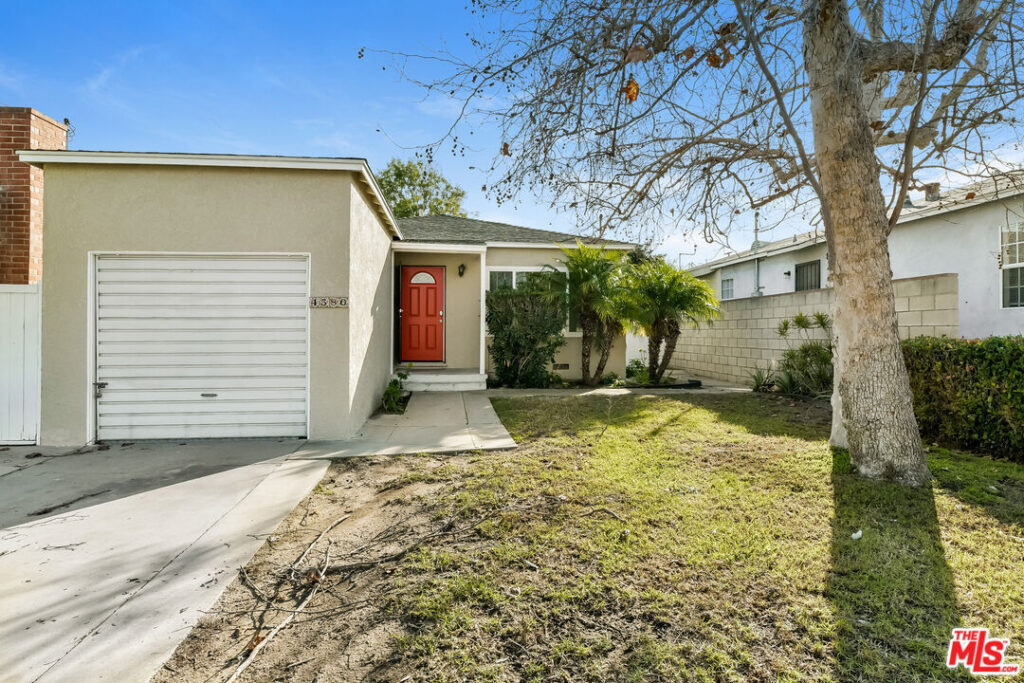
Hawthorne, CA 90250
Need to Chat?
Are you thinking about buying or selling a property in the Los Angeles area?
If the answer is YES, make sure you sit down for a candid conversation with Shannon—share your goals, ask any question, and discover why she’s one of the most successful real estate agents in Southern California!